Heart failure affects over 60 million people worldwide and remains one of the leading causes of hospitalisation in Europe.
While symptoms such as fatigue and shortness of breath may seem mild at first, they often mask a complex and progressive condition that requires careful, long-term management.
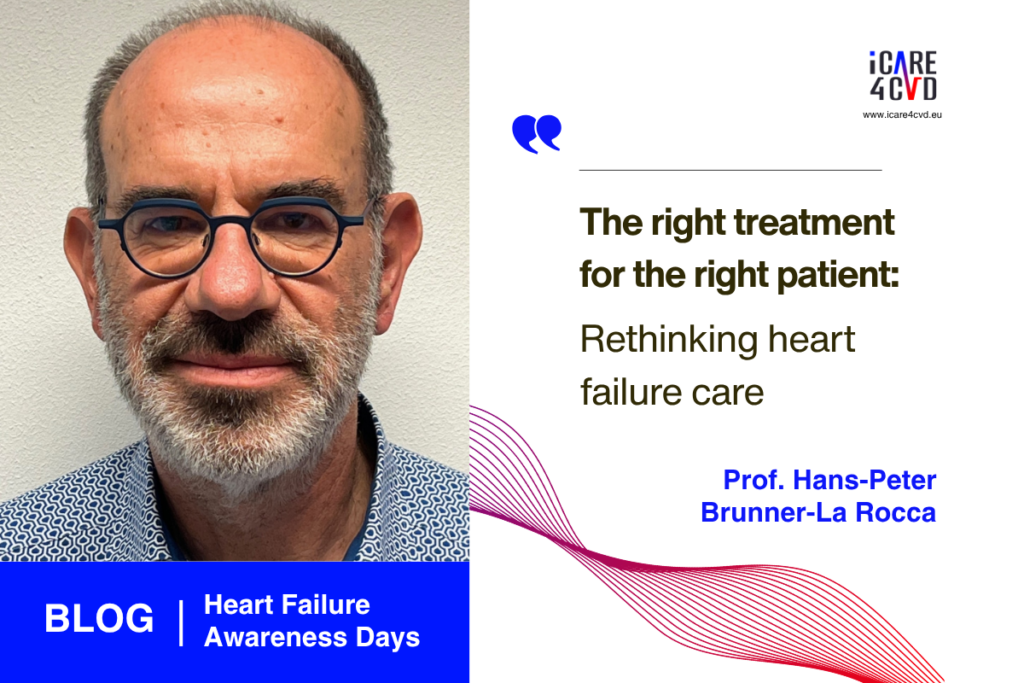
For Prof. Hans-Peter Brunner-La Rocca, cardiologist and coordinator of iCARE4CVD, this complexity is something he encounters every day in clinical practice.
“Heart failure is a serious disease with significant symptoms and still relatively poor outcomes. Fortunately, we now have a broad range of treatments that can significantly improve both survival and quality of life.”
Yet treating heart failure remains challenging. Patients often require multiple therapies, and not all are tolerated equally. As a result, many do not receive the full recommended treatment or optimal doses.
“We have many effective therapies, but not every patient benefits from them in the same way. Finding the best treatment for each individual patient remains a major challenge.”
While some aspects of care are already personalised – particularly when addressing underlying conditions – much of heart failure treatment still follows a standardised approach. In reality, this does not reflect the diversity of patients seen in clinical practice.
“What we need to understand is which treatments matter most for each patient."
This is a key focus of iCARE4CVD. By analysing large datasets using advanced technologies such as artificial intelligence, the project aims to better understand patient differences and identify those who would benefit most from specific therapies.
“Our goal is to move towards a much more targeted approach. Not only in treatment, but also in diagnosis and risk prediction – we aim to better identify subgroups of patients and match them with the therapies that will benefit them most. This could improve outcomes while reducing unnecessary side effects.”
Achieving this requires close collaboration across disciplines – bringing together clinicians, data scientists, and digital health experts. But equally important is the role of patients themselves.
“In clinical research, we often focus on medical outcomes. But for patients, quality of life, daily functioning, and personal priorities are just as important. If we want to make a real difference, we need to take these into account.”
This reflects a broader shift in how care is delivered. The traditional model – where clinicians decide and patients follow – is evolving into a more collaborative partnership.
“Patients should not just be seen as recipients of care, but as partners. This applies not only to treatment, but also to research. Together, we can achieve better and more meaningful results.”
As we mark Heart Failure Awareness Days, this perspective highlights a clear direction for the future – combining clinical expertise, data-driven innovation, and patient partnership to deliver truly personalised cardiovascular care.