
Can the way patients use home monitoring tell us something about their heart health? – new iCARE4CVD study
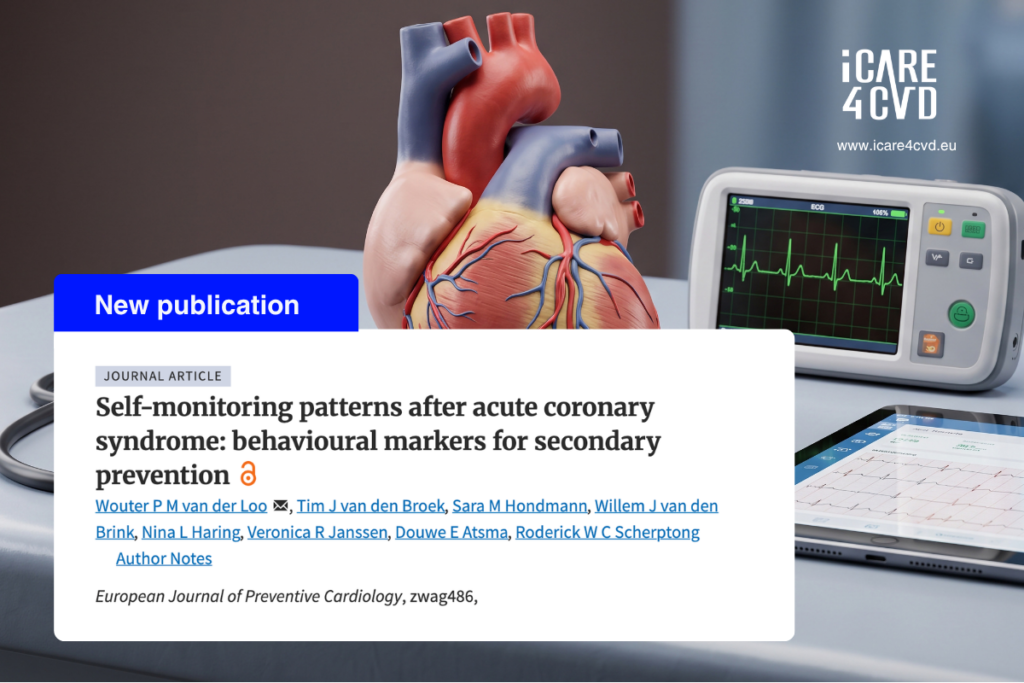
Can the way patients use home monitoring reveal something about their heart health? A new iCARE4CVD study involving 1,181 patients explores how different monitoring habits relate to cardiovascular risk factors and how these patterns could help healthcare teams provide more personalised support.
iCARE4CVD featured in Open Access Government
How can we turn complex cardiovascular data into better, more personalised care? In a new feature for Open Access Government, iCARE4CVD explores how researchers are connecting patient data, biomarkers, AI and clinical validation to help bring personalised cardiovascular care closer to practice.
Building Bridges: How Public-Private Collaboration Can Help Reshape Cardiovascular Innovation

Personalised cardiovascular medicine promises to give the right care to the right patient at the right time. But making that a reality takes more than a scientific breakthrough. It requires clinical expertise, patient data, technology, regulatory know-how and a path into everyday healthcare – expertise that rarely exists in one place. So how do we bring all the pieces together?
iCARE4CVD at ESC Congress 2026
In this video, Hajar Ghaem Sigarchian, discusses research presented at the European Society of Cardiology (ESC) Congress 2026. A big thank you to MediMix for featuring us on their channels!
iCARE4CVD 3rd annual meeting – 2,5 years of progress!

On 26–27 August, 75 consortium members from 40 partner organisations gathered in Munich for our fourth Annual Consortium Meeting, hosted by Amgen. Over two days, we stepped away from our usual online meetings, labs, hospitals and offices to share what we have achieved over the past year, exchange ideas and focus on what comes next!
More Data, Better Care? The Promise and Reality of Digital Biomarkers in Cardiovascular Disease
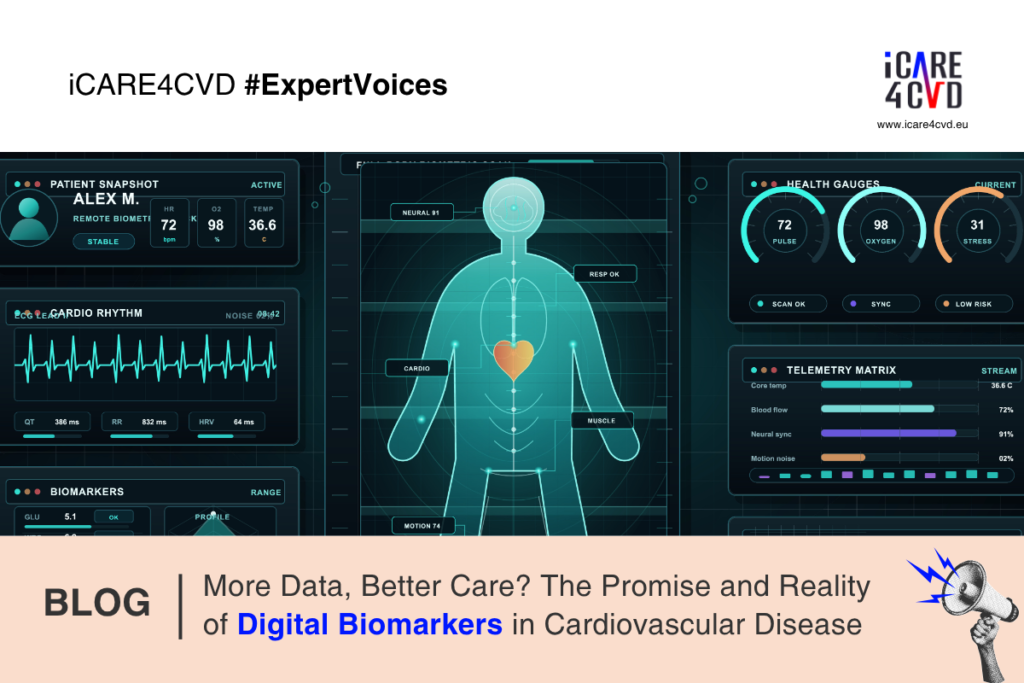
We have more data on our hearts than ever before. Smartwatches track our rhythm around the clock. Implanted sensors monitor pressure and flow. Algorithms flag irregularities before symptoms appear. So why are we still diagnosing cardiovascular disease too late?
Can AI make heart failure evidence reviews faster and more reliable? New iCARE4CVD research puts it to the test
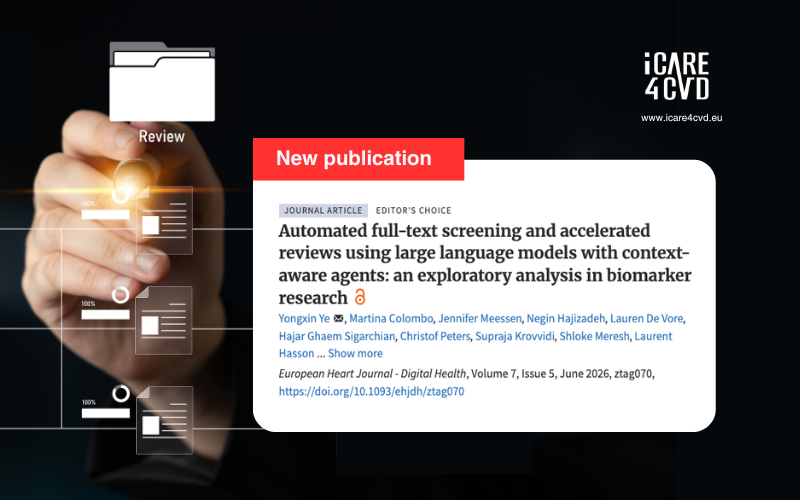
Screening thousands of research papers is one of the most time-consuming steps in evidence synthesis. A new study from the iCARE4CVD consortium asks whether large language models can do it reliably — and at scale.
Prediction or speculation: heart failure models for diabetes – An Editorial comment from iCARE4CVD
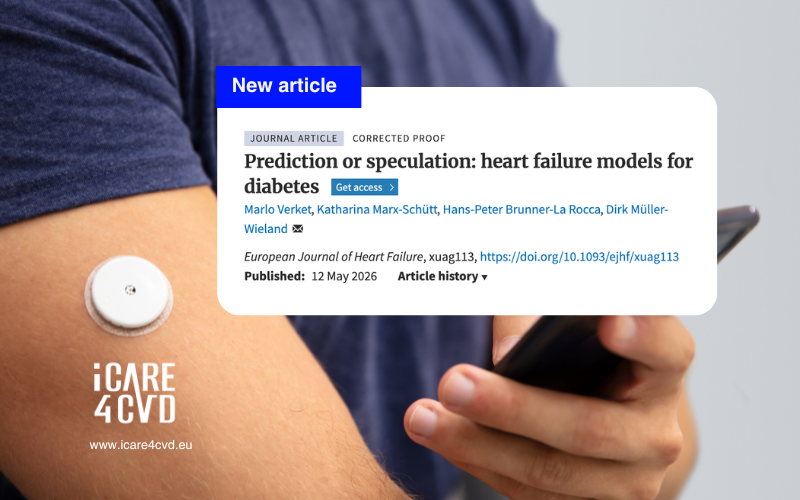
Can we predict heart failure in people with diabetes, or are we merely speculating? That is the question explored in a recent iCARE4CVD editorial, which discusses a large meta-analysis evaluating more than 50 prediction models designed to identify individuals with type 2 diabetes who are at risk of developing heart failure or being hospitalised because of it.
The Precision Moonshot: Redefining Cardiovascular Care for 85 Million Europeans

Cardiovascular disease affects 85 million Europeans, yet most patients are still treated as averages rather than individuals. In this article, our leading experts explore how personalised medicine could change that—transforming diagnosis, risk prediction, and treatment. They also unpack the barriers holding progress back, from fragmented data to outdated reimbursement models, and what it will take to bring truly patient-centred care into everyday practice.
The right treatment for the right patient: Rethinking heart failure care
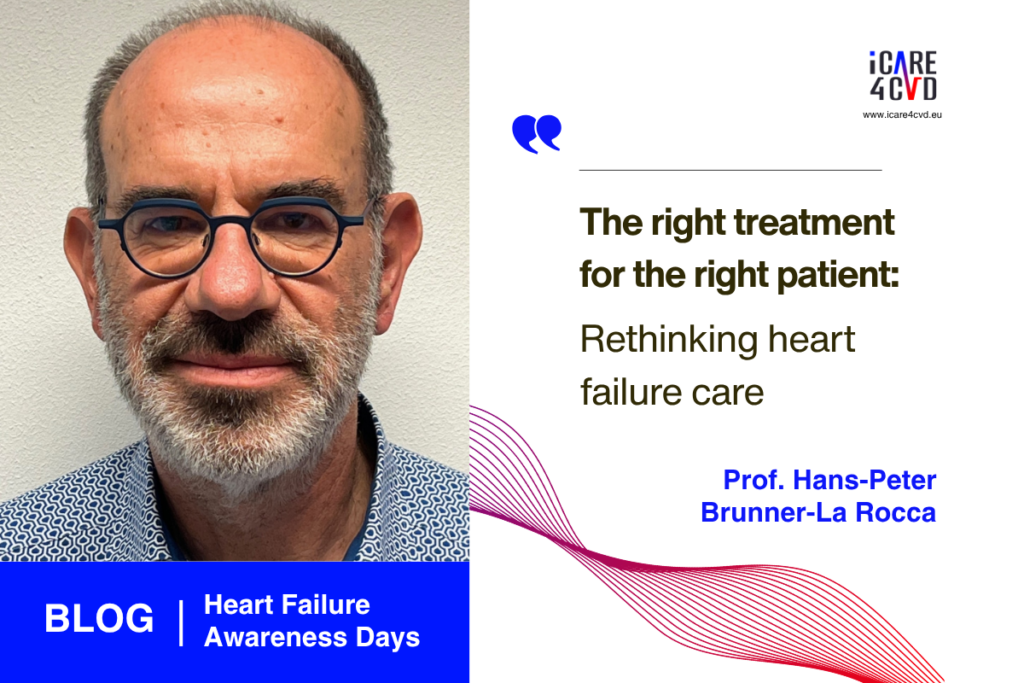
Heart failure is a leading cause of hospitalisation in Europe, especially among older adults, and remains complex to treat, particularly alongside other conditions. Despite advances, outcomes still vary, pointing to the need for more tailored care. In this article, Prof. Hans-Peter Brunner-La Rocca explores what lies ahead for heart failure care.


